In many parts of the United States, alfalfa is cut three to five times per year for three to five years; then the stand begins to lose productivity and it is rotated to another crop.Research has shown
One of the long-standing topics of debate in the forage world is whether it is advantageous to cut in the morning or during late afternoon. People still hang their hat on one side of this argument or
With a growing need for alfalfa, the Peoples Republic of China aims to significantly ramp up domestic production, according to a recent GAIN Report published by USDA’s Foreign Agricultural Service
I’ll admit it — for many years my eyes glossed right over the ash content of a forage sample. That’s not the case anymore.Ash content in harvested forages can have a significant role
Never, ever complain or worry about a dry late winter and early spring.We’ve probably all done this and perhaps still do, but more often than not Mother Nature evens the score in May and June
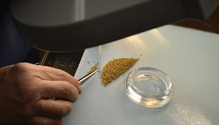
These articles cover alfalfa variety breeding and characterization, the progression from breeder seed through foundation to commercial seed, some basics of alfalfa seed growing and cleaning, and seed purity
In prior Hay & Forage Grower articles, we covered alfalfa variety breeding and characterization, the progression from breeder seed through foundation to commercial seed, and some basics of a
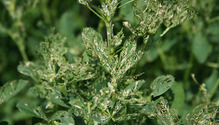
Cows aren’t the only creatures that like to eat alfalfa; count alfalfa weevils in that group as well.Entomologists across the U.S. are either filing reports of already severe alfalfa damage from
Here we go — the start of another growing season. In some areas of the U.S., the initial cutting of alfalfa is underway; for others, it is near, while some are just starting to watch the first signs
It’s that time of year when some hay, livestock, and dairy producers will seek available hayfields to bolster their own forage supplies.When you sit in an extension office as I did for 27 years,
When ordering pizza, I’m partial to mushrooms ... and only mushrooms.Don’t try to complicate the issue with the likes of pepperoni, sausage, pineapple, peppers, onions, or any other item on
There was a day when spring-seeded alfalfa and an oat (or other small grain) companion crop went hand in hand. Though maybe not to the extent of the rotary phone, companion crops are now much le
Landing in Milwaukee last Friday after a week in California at the World Ag Expo, I had the usual February expectation of frigid air and perhaps blowing snow. That’s the Upper Midwest norm.Instead
Yield versus quality: What is more important? Which is easier to comprehend? When interacting and facilitating discussions during forage planning meetings, the conversations regarding yield
For the moment, let’s put harvest timing aside, though it plays a primary role in harvested forage quality. We’ll also leave alfalfa genetics on the sideline, reduced lignin or not
Here’s the thing about biological systems: stuff happens.Such was the case for Steve Orloff in the spring of 2014. The extension farm advisor in Siskiyou County, Calif., was on a farm to troubleshoo
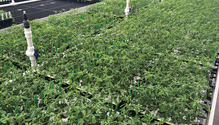
Breeder seed is early-generation seed produced from a polycross of multiple parent plants, creating an experimental cultivar. Breeder seed production is typically done in a greenhouse