Brown midrib (BMR) corn has been a key player in the starting lineup of many dairy farmers’ feed crop rotations. But now that BMR hybrids are being called off the court and phased off the market,
I have been asked what ideal corn silage looks like quite a few times over the past 15 years. With dairy and beef producers feeding greater amounts of corn silage to their herds, yield and quality are
“Not all rumors are true, but there is probably a shred of truth in each.” That was Matt Makens’s first comment as he took the stage at the National Cattlemen’s Beef Association’s
For many people in the dairy industry, the phase-out of brown midrib (BMR) corn is akin to losing the four-wheel drive option in a pickup truck. Sure, the pickup will go most places, but there will be
USDA launched its Crop Production Annual Summary yesterday, which contains final numbers for hay production, acreage, and average yields in 2025.According to the report, forage production was relative
In a recent Hoard’s Dairyman webinar titled “A feed and forage outlook for the year ahead,” Mike Hutjens with the University of Illinois summarized the highs and lows of corn silage and
Best corn silage feeding practices include removing only a day’s worth of material from storage to limit spoilage and ensure animals always receive fresh feed. But in order to maintain this feeding
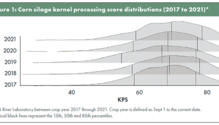
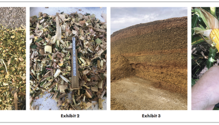
Let us join together and wish the corn silage kernel processing score a belated happy 15th birthday! Gonzalo Ferriera and Dave Mertens published the original article
In a corn silage system, producers are served by two equally important groups: the nutritionists, who help feed the silage, and the agronomists, who help grow it
Picture yourself with the playbook in your hands as several key decisions loom while coaching your team in the final minutes of the game. Your team is relying on you to put them in the right position
If corn is king, then alfalfa is the queen of forages. Corn silage and alfalfa complement one another well in forage cropping systems for dairy/livestock systems
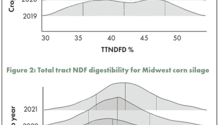
Forage quality is often discussed and written about. Often, through experience, we understand improved fiber and starch digestibility to mean more energy available per pound of silage fed
It was nearly 10 years ago when I attended an agronomy field day in Arlington, Wis., and heard John Grabber speak about some initial research he was doing that entailed establishing alfalfa under sila
Silage shrink can cause silage to go from an economical source of feed to one that doesn’t make sense or cents. Shrink is the dry matter (DM) that is harvested but lost before feeding